Karachi is a city of contrasts.
Pakistan’s largest city stretches along the Arabian Sea, where the energy of a modern metropolis meets a long maritime history. Its streets bring together people and traditions from across Pakistan, while its architecture tells stories of British colonial rule, Muslim heritage, Hindu and Parsi communities, the birth of Pakistan, and the rapid growth of a modern commercial center.
Unlike Islamabad, which is known for its orderly avenues, greenery and mountain setting, Karachi is energetic, expansive and unmistakably urban. It is a city of busy markets, historic neighborhoods, seaside promenades, modern shopping malls, colonial buildings, museums, mosques, churches, cultural institutions and restaurants.
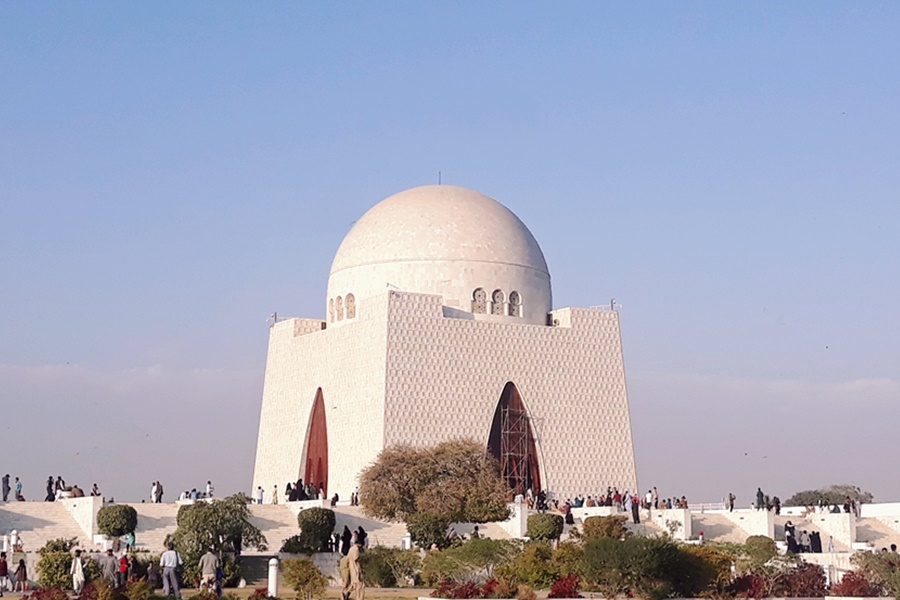
Karachi is also deeply connected to the story of Pakistan itself. The city is home to Mazar-e-Quaid, the mausoleum of Muhammad Ali Jinnah, the founder of Pakistan. Jinnah’s birthplace and former residence are also preserved here, allowing visitors to explore the personal history of the man who played a central role in the creation of the country.
Yet Karachi is not only about history.
Its coastline gives the city another identity. Clifton Beach, Manora Island, Hawke’s Bay, Sandspit and other coastal areas provide opportunities to experience the Arabian Sea, while waterfront destinations such as Port Grand and Do Darya combine dining, entertainment and spectacular seaside views.
Then there is the food.
Karachi is one of Pakistan’s great culinary cities. From biryani and nihari to barbecue, seafood, bun kebabs, haleem, traditional sweets and street food, eating in Karachi is an essential part of experiencing the city.
For international visitors, Karachi offers a fascinating introduction to the diversity of Pakistan. It is a city where history, commerce, migration, cuisine, architecture, and the sea have shaped one another for generations.
Come for the history, discover the culture, explore the coast, taste the cuisine, and experience the extraordinary energy of Pakistan’s largest city.
Karachi is Pakistan’s economic and commercial hub and one of the country’s most culturally diverse cities. Its location on the Arabian Sea has shaped its history, economy, and character, while its growth into a major metropolis has brought together communities and traditions from across Pakistan.
The city offers an unusually broad range of experiences.
You can begin your day exploring the history of Pakistan at Mazar-e-Quaid, visit the house where Muhammad Ali Jinnah lived, discover the city’s colonial architecture, explore museums, shop in traditional markets, enjoy lunch at a famous local restaurant, and finish the day watching the sunset over the Arabian Sea.
For travelers, Karachi is particularly attractive because it combines:
The city also provides a gateway toward the Makran coast, Sindh’s historic landscapes and destinations farther west along the Arabian Sea.
The best way to experience Karachi is to understand its different personalities.
The historic heart of the city reveals the story of colonial Karachi and the early years of Pakistan. The Clifton and Defence areas offer a more modern and affluent side of the metropolis. The coastline reveals Karachi’s relationship with the Arabian Sea, while its markets and restaurants reveal the diversity of the people who call the city home.
A well-planned Karachi city tour therefore combines history, architecture, culture, food, shopping and the coast rather than focusing on a single type of attraction.
No Karachi travel experience is complete without visiting Mazar-e-Quaid, the mausoleum of Muhammad Ali Jinnah.
The striking white-marble monument stands within landscaped gardens and is one of Pakistan’s most important national landmarks. Its clean geometric design and prominent position give it an imposing presence within the city.
The mausoleum is closely associated with the story of Pakistan’s creation. Jinnah, widely known as Quaid-e-Azam, was the principal leader of the movement that resulted in the establishment of Pakistan in 1947.
The complex also contains the graves of other important figures associated with the early history of Pakistan, including Fatima Jinnah and Liaquat Ali Khan.
For international visitors, Mazar-e-Quaid is more than an architectural landmark. It is an opportunity to begin understanding the political and historical story behind modern Pakistan.
To understand Muhammad Ali Jinnah beyond the national monument, visit the Quaid-e-Azam House Museum, also known as Flagstaff House.
Jinnah lived in this elegant colonial-era residence from 1944 until he died in 1948. Today, the house has been preserved as a museum, displaying furniture, personal belongings, and historical objects associated with his life.
The building itself is architecturally significant, with its yellow stone exterior, arched openings and classical details.
Together, Mazar-e-Quaid and Quaid-e-Azam House Museum provide two very different perspectives on Jinnah: one represents his national legacy, while the other offers a more intimate glimpse into his private life.
Karachi also preserves the house where Muhammad Ali Jinnah was born.
Located in the historic Kharadar area, Wazir Mansion dates to the nineteenth century and has been preserved as a museum dedicated to Jinnah’s early life.
The building contains artifacts and memorabilia associated with his childhood and family background.
For travelers interested in the history of Pakistan, visiting Wazir Mansion provides an important connection between the individual and the larger national story.
One of Karachi’s most distinctive historic buildings is Mohatta Palace.
Built in 1925 as the summer residence of businessman Shivratan Chandraratan Mohatta, the palace reflects Indo-Saracenic architectural influences and combines pink Jodhpur stone with Karachi’s distinctive yellow stone.
Its ornamental design, arches, domes, and decorative details create a remarkable contrast with the surrounding modern city.
Today, Mohatta Palace functions as a museum and cultural center, hosting exhibitions and cultural activities.
The palace also reflects an important part of Karachi’s history: before and after Partition, the city was home to communities with diverse religious, ethnic and cultural backgrounds.
For architecture enthusiasts, photographers, and travelers interested in Karachi’s multicultural past, Mohatta Palace is an essential stop.
Karachi’s colonial history is particularly visible in its historic buildings.
Frere Hall, constructed in the nineteenth century, is one of the city’s best-known examples of colonial architecture. Built using local Karachi limestone, the building combines Gothic influences with features adapted to the local environment.
Today, Frere Hall remains an important cultural space, surrounded by landscaped gardens and associated with art exhibitions and cultural activities.
Its historic architecture provides a window into the period when Karachi was developing rapidly as an important port and commercial center under British rule.
Another remarkable architectural landmark is Hindu Gymkhana, built in the early twentieth century.
The building combines Mughal and Hindu architectural influences and was originally established as a social club for Karachi’s Hindu community.
Today it is associated with the National Academy of Performing Arts and continues to have an important role in Karachi’s cultural and artistic life.
Its history illustrates the multicultural character of the city and the architectural diversity that developed in Karachi before Partition.
For travelers who want to understand Pakistan beyond Karachi, the National Museum of Pakistan is one of the most useful places to visit.
The museum contains an extensive collection of archaeological, historical, and cultural artifacts representing different periods of Pakistan’s history.
Its collections include material associated with ancient civilizations, Gandhara, Islamic history, manuscripts, coins, and other cultural objects.
A visit to the museum helps connect Karachi to the much larger historical story of the country—from ancient civilizations and Buddhist Gandhara to Islamic culture and the development of modern Pakistan.
For first-time visitors, it provides useful historical context before traveling to destinations such as Mohenjo-daro, Taxila, Lahore or Peshawar.
Karachi is also home to the PAF Museum, a fascinating destination for travelers interested in aviation and military history.
The museum displays aircraft, fighter jets, equipment, models, and memorabilia associated with the Pakistan Air Force.
Outdoor displays allow visitors to see aircraft at close range, while indoor exhibits provide additional historical context.
The museum is particularly popular with families and aviation enthusiasts, but it can also be an interesting stop for visitors wanting to understand another dimension of Pakistan’s modern history.
Karachi’s identity cannot be understood without considering its relationship with the sea.
The Pakistan Maritime Museum explores the country’s naval and maritime heritage through galleries, models, artifacts, and outdoor displays.
One of the highlights is the preserved submarine, which gives visitors a tangible sense of Pakistan’s maritime history.
The museum is particularly appropriate in Karachi because the city’s development has always been closely linked with its port and its position on the Arabian Sea.
For travelers interested in ships, naval history, and maritime culture, it offers a different perspective on Pakistan.
Karachi is Pakistan’s financial center, making the State Bank Museum an especially relevant cultural attraction.
Located on I.I. Chundrigar Road, the museum explores the history of currency and banking in Pakistan.
Its collections include coins, banknotes, stamps, and artworks, while the historic building itself contributes to the experience.
The museum offers an interesting way to understand the economic history of the country and the role Karachi has played as Pakistan’s commercial and financial center.
To experience Karachi’s traditional market culture, head toward Empress Market in Saddar.
The historic market dates from the British colonial period and remains associated with the commercial life of central Karachi.
Markets such as Empress Market provide a very different experience from the city’s modern shopping malls.
Here, the atmosphere is lively and intensely local, with merchants, shoppers, food products, spices, and everyday goods creating a vivid picture of urban Karachi.
For travelers interested in photography and everyday life, the historic markets are among the most rewarding places to explore.
Karachi is also an excellent destination for shopping.
Zainab Market, located in the Saddar area, is known for textiles, handicrafts, leather goods, souvenirs, and other items.
For international visitors, it can be an enjoyable place to look for gifts and traditional Pakistani products while experiencing the atmosphere of a busy local market.
Bargaining is part of the traditional market experience, although visitors should approach it respectfully and with a sense of perspective.
After exploring the city’s history and markets, head toward the coast.
Clifton Beach is one of Karachi’s most recognizable seaside destinations. Its broad sandy shoreline, Arabian Sea views, and lively atmosphere make it a popular gathering place for residents and visitors.
The beach offers a distinctly Karachi experience, particularly toward the evening when families and groups gather along the waterfront.
For international travelers, visiting Clifton Beach provides an opportunity to see a more informal and recreational side of Karachi.
Located near Clifton, Bagh Ibne Qasim is one of the city’s major public parks.
Its lawns, walking areas, gardens, and open spaces provide a welcome contrast to Karachi’s busy urban environment.
The park can be combined with Clifton Beach and other nearby attractions to create a relaxed coastal afternoon.
For a different coastal experience, take a boat or ferry toward Manora Island.
Located near Karachi’s harbor, Manora combines beaches and sea views with historic maritime landmarks, including its lighthouse and remnants of the area’s naval and colonial past.
The journey to the island is part of the attraction, providing visitors with a different perspective of Karachi from the water.
Manora is particularly appealing to travelers who want to combine coastal scenery with history.
For visitors wanting to escape the intensity of the city, Hawke’s Bay and Sandspit Beach offer a more relaxed coastal environment.
Located southwest of the city, these beaches are known for sandy shores and open sea views and are popular for picnics and recreational outings.
The area is also associated with sea turtle nesting, adding an ecological dimension to the coastal experience.
These beaches are best appreciated as part of a dedicated coastal outing rather than a quick sightseeing stop.
Karachi’s religious architecture includes some striking modern landmarks.
Masjid-e-Tooba, also known as Gol Masjid, is particularly distinctive for its enormous white dome and minimalist architectural character.
The mosque’s vast dome is constructed without conventional central support columns, creating an impressive interior space.
For visitors interested in Islamic architecture, it provides another example of how Karachi’s architectural landscape combines traditional religious forms with modern design.
Karachi’s multicultural history can also be seen in its religious architecture.
St. Patrick’s Cathedral, located in the Saddar area, is one of the city’s historic Christian landmarks and an important example of neo-Gothic architecture.
The cathedral reflects the presence and contribution of Christian communities to Karachi’s history and adds another dimension to the city’s multicultural heritage.
Together with mosques, Hindu architectural landmarks and colonial buildings, Karachi’s religious architecture illustrates the city’s diverse cultural past.
As the day gives way to evening, Karachi becomes a different city.
Port Grand is a waterfront entertainment and dining destination where visitors can enjoy restaurants, open-air spaces, cultural activities, and views across the harbor.
It is particularly attractive around sunset and after dark, when the waterfront atmosphere becomes lively.
For travelers looking for a more contemporary side of Karachi, Port Grand offers a combination of food, entertainment, and waterfront scenery.
Food is one of the great reasons to visit Karachi, and few places combine food and scenery as effectively as Do Darya.
Located along the coastline, the area is known for its restaurants and cafés overlooking the Arabian Sea.
It is an excellent place to enjoy seafood, Pakistani dishes, and other cuisines while watching the sunset or listening to the sound of the sea.
For visitors, Do Darya demonstrates another side of Karachi: sophisticated, modern and deeply connected to the coast.
If Islamabad introduces visitors to the geography and cultural diversity of Pakistan, Karachi introduces them to the country through its food.
Karachi’s culinary culture has been shaped by migration, trade, ethnicity, and regional traditions. Punjabi, Sindhi, Pashtun, Balochi, Gujarati, Hyderabadi and Muhajir influences can all be found within the city’s food culture.
The result is one of Pakistan’s most exciting culinary landscapes.
A Karachi itinerary should therefore include dedicated time for eating.
Few foods are as closely associated with Karachi as biryani.
Karachi-style biryani is known for its fragrant rice, tender meat, spices, and distinctive combination of flavors.
It is served throughout the city, from casual neighborhood restaurants to well-known food establishments.
For first-time visitors, tasting biryani in Karachi is almost a rite of passage.
Nihari is another dish that occupies an important place in Karachi’s food culture.
The rich meat stew is slowly cooked with spices until the meat becomes tender and the gravy develops a deep, complex flavor.
It is traditionally served with naan and garnished with ginger, green chilies, coriander and lemon.
For visitors wanting to experience the richness of traditional Pakistani cooking, nihari is an excellent choice.
Karachi’s food culture is not limited to formal restaurants.
The city is famous for street food, and bun kebab is among its most recognizable examples.
A seasoned kebab is served inside a soft bun, often accompanied by chutney, onions, and other fillings.
It is simple, inexpensive, and distinctly urban—a good example of Karachi’s fast-moving street-food culture.
Karachi offers an enormous range of grilled foods.
Seekh kebabs, chicken tikka, malai boti, and other barbecue dishes are widely available.
The combination of charcoal, spices, and marinated meat produces the smoky flavors that are central to Pakistani barbecue.
For international travelers, a mixed barbecue platter can be a convenient way to sample several dishes in one meal.
Karachi’s coastal location naturally makes seafood an important part of its cuisine.
Fish, prawns, and other seafood can be enjoyed in restaurants across the city, particularly around the coastal dining areas.
Eating fresh seafood beside the Arabian Sea provides a culinary experience that is distinctly Karachi.
Haleem, made from grains, lentils, meat, and spices, is another popular dish worth trying.
Visitors may also encounter paya, karahi, grilled meats, dal, tandoori breads, and a wide variety of regional Pakistani dishes.
The city’s restaurants make it possible to move across Pakistan’s culinary traditions without leaving Karachi.
No culinary journey is complete without dessert.
Traditional sweets such as gulab jamun, jalebi, and kheer can be found throughout the city, along with a wide variety of regional and contemporary desserts.
For travelers exploring Karachi’s markets and food districts, sampling local sweets is an enjoyable way to end a meal.
Food in Karachi is closely connected to social life.
Restaurants, roadside stalls, markets and tea shops are places where people meet, talk and spend time together.
The city’s food culture also reflects its extraordinary diversity. A visitor can move from Sindhi cuisine to Karachi’s famous biryani, then try Pashtun barbecue, Gujarati-influenced dishes, seafood and traditional Pakistani sweets.
This makes Karachi one of the best places in Pakistan to explore the country through its cuisine.
Shopping is another important part of the Karachi experience.
The city ranges from traditional bazaars to modern shopping malls.
Historic markets such as Empress Market and Zainab Market offer a more traditional experience, with textiles, handicrafts, leather products, souvenirs, and everyday goods.
Modern shopping destinations such as Dolmen Mall Clifton provide a very different environment, with local and international brands, restaurants and entertainment.
This contrast reflects Karachi itself: traditional commerce and modern consumer culture exist side by side.
The sea is perhaps the feature that most clearly distinguishes Karachi from Pakistan’s other major cities.
The Arabian Sea has shaped the city’s history, economy, recreation and cuisine.
A Karachi itinerary should therefore make time for the coast.
You can experience the sea at Clifton Beach, explore Manora Island, travel toward Hawke’s Bay and Sandspit, or simply enjoy dinner overlooking the water at one of the city’s waterfront destinations.
The coastline also provides some of Karachi’s most memorable sunset experiences.
Karachi is more than a destination in itself. It is also an important starting point for journeys into Sindh and toward the Arabian Sea coast.
Travelers with additional time can use Karachi as a base or starting point for exploring destinations farther afield.
Depending on the itinerary and available time, journeys can extend toward:
For travelers interested in history and archaeology, Sindh offers an entirely different chapter of Pakistan’s heritage.
For travelers interested in landscapes and the sea, the Makran coast offers dramatic coastal scenery and a completely different environment from Karachi.
Karachi therefore works particularly well as the first major stop in a wider journey through southern Pakistan.
Karachi’s position as Pakistan’s largest city and major commercial center makes it an important transport hub.
For international travelers, Karachi can serve as either the beginning or end of a Pakistan itinerary.
A traveler might begin in Karachi, explore Sindh and then continue north toward Lahore and Islamabad.
Alternatively, Karachi can be the final destination after traveling through Punjab, Khyber Pakhtunkhwa, or northern Pakistan.
This flexibility makes the city particularly useful for longer Pakistan itineraries.
A one-day Karachi city tour can cover the major historical landmarks, including Mazar-e-Quaid, Quaid-e-Azam House Museum, Mohatta Palace, Frere Hall, and selected museums.
However, two days provide a much better introduction to Karachi.
With two days, travelers can divide the experience between the historic city and the coast.
A second day can include Clifton, Bagh Ibne Qasim, Manora, or another coastal destination, followed by an evening meal overlooking the Arabian Sea.
Travelers with three or more days can explore additional museums, markets, shopping areas and excursions beyond the city.
Because Karachi is large and traffic can affect travel times, it is better to organize sightseeing geographically rather than attempting to cover the entire city in a single day.
Karachi has a generally warm coastal climate, and the experience changes considerably through the year.
Winter is generally the most comfortable season for sightseeing, particularly for international visitors who prefer milder temperatures.
The cooler weather makes city tours, historical sightseeing, and coastal excursions more enjoyable.
Spring brings warmer conditions while remaining suitable for sightseeing, although temperatures gradually increase as the season progresses.
It is a good period for exploring the city before the stronger summer heat arrives.
Summer can be hot and humid, with coastal humidity influencing the experience.
Visitors traveling during this period should plan outdoor sightseeing carefully, particularly around midday, and allow time for indoor attractions such as museums and shopping centers.
The monsoon can bring periods of rain and increased humidity. Coastal weather can change quickly, so visitors should consider current conditions when planning beach and island excursions.
For travelers interested in history and culture, Karachi offers a remarkable concentration of experiences.
A heritage-focused itinerary could follow a route such as:
Mazar-e-Quaid → Wazir Mansion → Quaid-e-Azam House Museum → Mohatta Palace → Frere Hall → Hindu Gymkhana → National Museum
This journey moves through different chapters of Karachi’s history:
The result is much more than a sightseeing tour. It is a journey through the historical evolution of one of South Asia’s great port cities.
Food travelers can create an entirely separate Karachi itinerary.
Begin with traditional breakfast, explore local markets, try biryani or nihari for lunch, sample barbecue or seafood in the evening, and finish the day with traditional sweets or tea.
The city’s diversity makes it possible to explore different regional cuisines without leaving Karachi.
For international visitors, this can be one of the most memorable aspects of the journey.
Karachi also offers plenty for families.
The PAF Museum, Pakistan Maritime Museum, parks, shopping malls, Clifton Beach, and waterfront entertainment destinations provide experiences suitable for visitors of different ages.
Families can combine educational attractions with recreational activities rather than spending an entire day on conventional sightseeing.
Karachi offers an unusually diverse photographic environment.
Photographers can capture:
The contrast between old and new Karachi makes the city particularly rewarding for documentary and street photography.
Perhaps the most interesting thing about Karachi is not any single attraction.
It is the city itself.
Karachi is fast-moving, diverse and constantly changing. People from almost every part of Pakistan have contributed to its development, creating a city where languages, cuisines, traditions and lifestyles intersect.
Its markets are busy, its roads are energetic, its coastline provides moments of calm, and its historic buildings preserve memories of earlier generations.
For visitors, Karachi offers an opportunity to see a very different side of Pakistan from the mountains of the north or the planned capital of Islamabad.
Karachi is Pakistan at its most cosmopolitan.
It is a city where the story of the country’s founding can be explored through Mazar-e-Quaid and Jinnah’s historic residences; where colonial buildings stand beside modern commercial districts; where museums preserve ancient and modern heritage; where traditional markets remain part of everyday life; and where the Arabian Sea provides an ever-present backdrop.
Its greatest strength is diversity.
Within a single Karachi itinerary, travelers can explore the birthplace of Pakistan’s founder, admire Indo-Saracenic and colonial architecture, visit museums, shop in historic markets, eat biryani and seafood, walk along the coast, explore an offshore island, and watch the sunset over the Arabian Sea.
And Karachi is not simply a city to visit.
It is also a gateway to southern Pakistan, Sindh’s extraordinary heritage and the dramatic coastline stretching west toward Balochistan and Gwadar.
Karachi is a city best understood through experience.
Walk through its historic neighborhoods. Visit the places associated with Muhammad Ali Jinnah. Explore museums that tell the story of Pakistan. Admire the architectural legacy of different communities and historical periods. Wander through traditional markets. Sit down for a plate of biryani or nihari. Try the city’s barbecue and seafood. Then head toward the coast as the sun begins to set.
What makes Karachi memorable is the way these experiences come together.
It is historic but modern, traditional but cosmopolitan, intensely urban yet deeply connected to the sea.
For first-time visitors, Karachi provides a fascinating introduction to Pakistan’s diversity.
For returning travelers, it offers layers of history, food and culture that reward deeper exploration.
And for travelers planning a wider journey through southern Pakistan, Sindh, Balochistan or the Makran coast, Karachi is the natural starting point.
Come for the history, stay for the food, discover the coast and experience the energy of Pakistan’s largest city. Karachi is where Pakistan’s many cultures meet the Arabian Sea.