
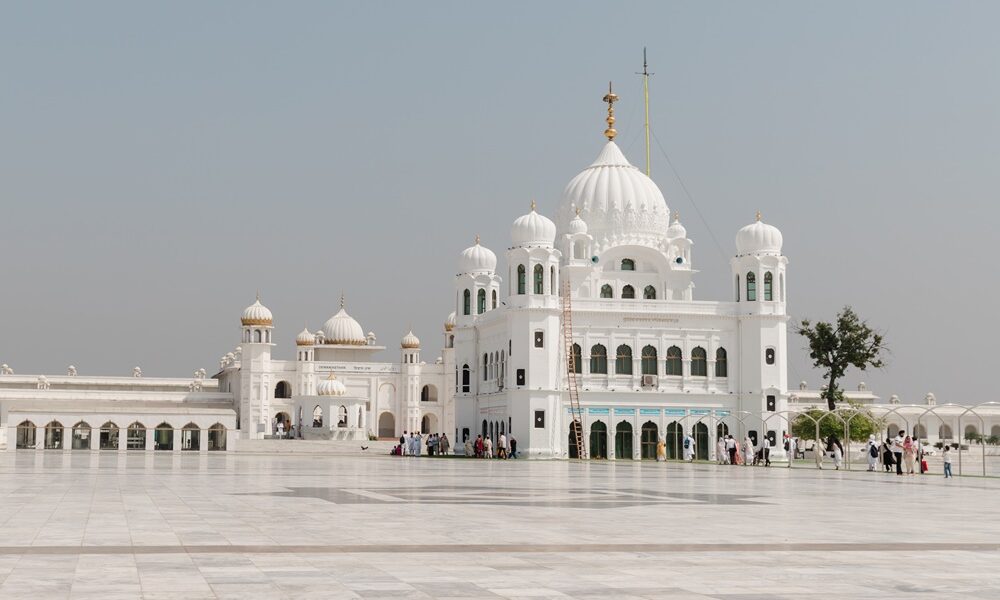
Sikh Heritage in Pakistan
Sikh Heritage in Pakistan
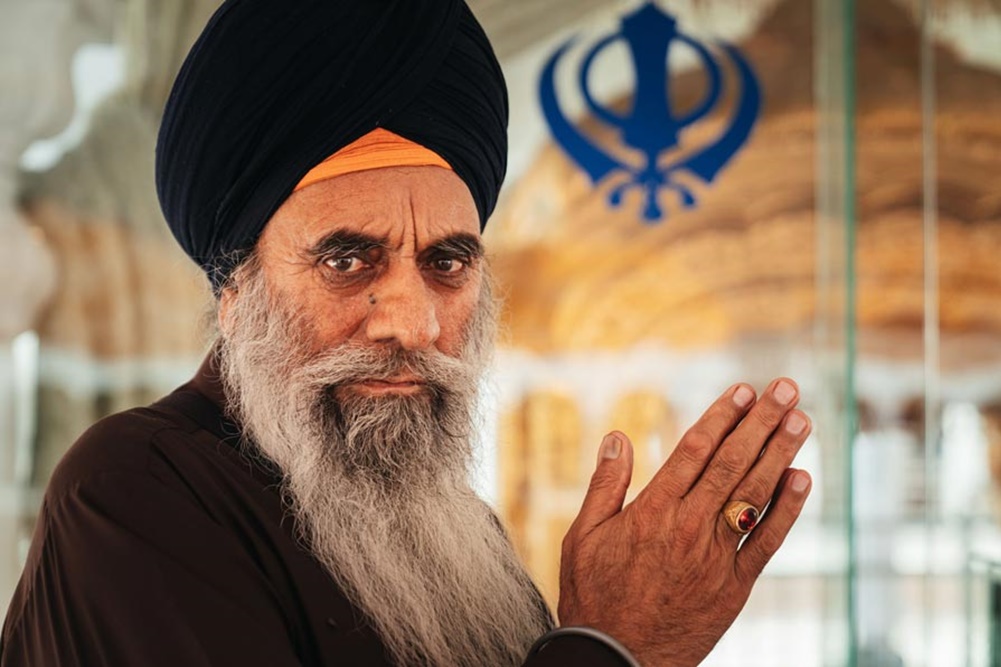
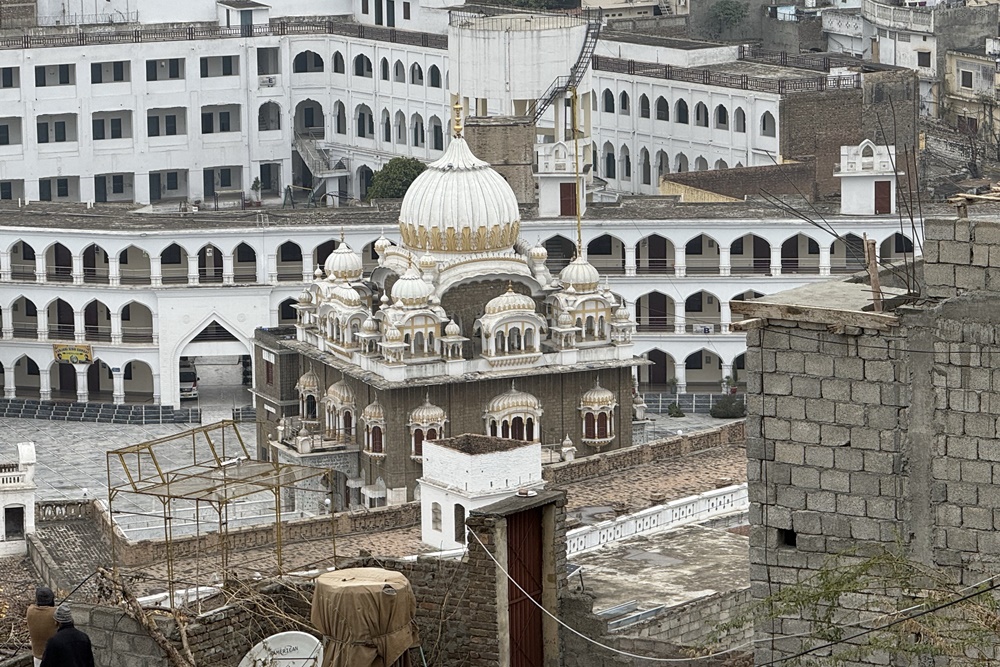
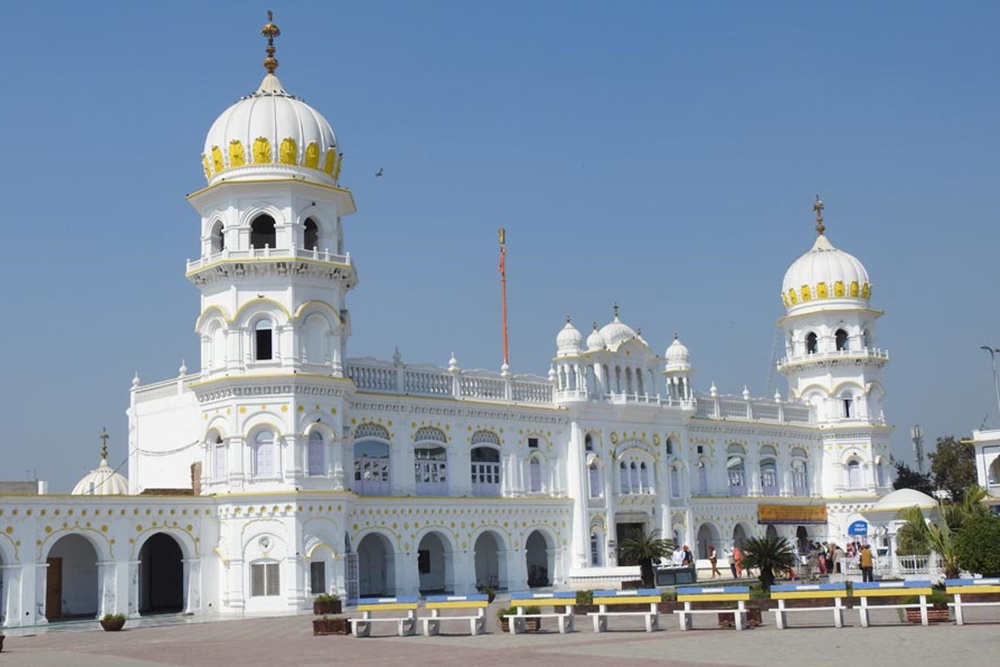
Sikh Heritage in Pakistan: A Journey Through Sacred Gurdwaras, History & Culture
Pakistan holds a uniquely important place in the spiritual and historical consciousness of Sikhs around the world. Long before the creation of modern borders, the region that is now Pakistan was central to the life, travels, teachings, and history of Guru Nanak Dev Ji, the founder of Sikhism, as well as several other Sikh Gurus and important figures in Sikh history.
For the global Sikh community, Pakistan is therefore much more than a travel destination. It is a land of birthplaces, places of worship, historic communities, sacred landscapes, and memories associated with the Gurus. From Nankana Sahib, where Guru Nanak Dev Ji was born, to Kartarpur, where he spent the final years of his life, and Hasan Abdal, where Gurdwara Panja Sahib commemorates one of the most revered episodes associated with his life, Pakistan contains some of the most significant Sikh pilgrimage sites outside India.
A journey through Sikh heritage in Pakistan can take travelers from the historic streets of Lahore to the sacred city of Nankana Sahib, the gurdwaras of Eminabad and Sheikhupura, the pilgrimage center of Kartarpur, the historic settlement of Hasan Abdal, and as far northwest as Peshawar. Along the way, visitors encounter not only gurdwaras but also Mughal monuments, Sikh-era architecture, bazaars, museums, forts, historic neighborhoods, and the living culture of Pakistan.
For Sikh pilgrims, heritage travelers, historians, and travelers interested in religious tourism, Pakistan offers an extraordinary opportunity to connect with the roots of Sikh history.
Why Is Pakistan So Important to the Sikh Community?
The answer lies in the geography of Guru Nanak Dev Ji’s life.
Guru Nanak Dev Ji was born at Rai-Bhoi-di-Talwandi, now known as Nankana Sahib, in Punjab in 1469. Today, Gurdwara Janam Asthan stands at the site associated with his birth and is one of the most revered Sikh shrines in Pakistan. The official Nankana Sahib district website describes Janam Asthan as the birthplace of Guru Nanak and notes that the shrine forms part of an important ensemble of gurdwaras in the city.
Guru Nanak’s travels and teachings also left an important geographical footprint across present-day Pakistan. He preached in different parts of the region, interacted with people from different faiths and social backgrounds, and established communities around his teachings.
At Kartarpur, on the banks of the Ravi River, Guru Nanak established a community and spent the final years of his life. He farmed, worked alongside the community, shared food, and developed a way of life centered on spiritual devotion, honest work, and sharing with others. He lived there for approximately 18 years until his death in 1539.
The significance of these places means that a pilgrimage to Pakistan can become a deeply personal experience. A Sikh visitor is not simply seeing an old building; they are visiting locations connected with the life and teachings of the Gurus.
That is why Nankana Sahib, Kartarpur Sahib, Panja Sahib and other historic gurdwaras remain powerful destinations for Sikh pilgrims from around the world.
The Major Sikh Heritage Sites in Pakistan
Pakistan has a substantial Sikh heritage inventory. Some sites remain active and important pilgrimage destinations, while others are historic structures, ruins, private properties, or sites whose accessibility can vary.
The Evacuee Trust Property Board, which administers many religious properties left behind following Partition, identifies several major gurdwaras as principal Sikh shrines in Pakistan. These include Gurdwara Janam Asthan, Nankana Sahib; Gurdwara Sacha Sauda, Farooqabad; Gurdwara Panja Sahib, Hasan Abdal; Gurdwara Dera Sahib, Lahore; Gurdwara Darbar Sahib Kartarpur; Gurdwara Rohri Sahib, Eminabad; and Gurdwara Bhai Joga Singh, Peshawar.
-
Gurdwara Janam Asthan — Nankana Sahib
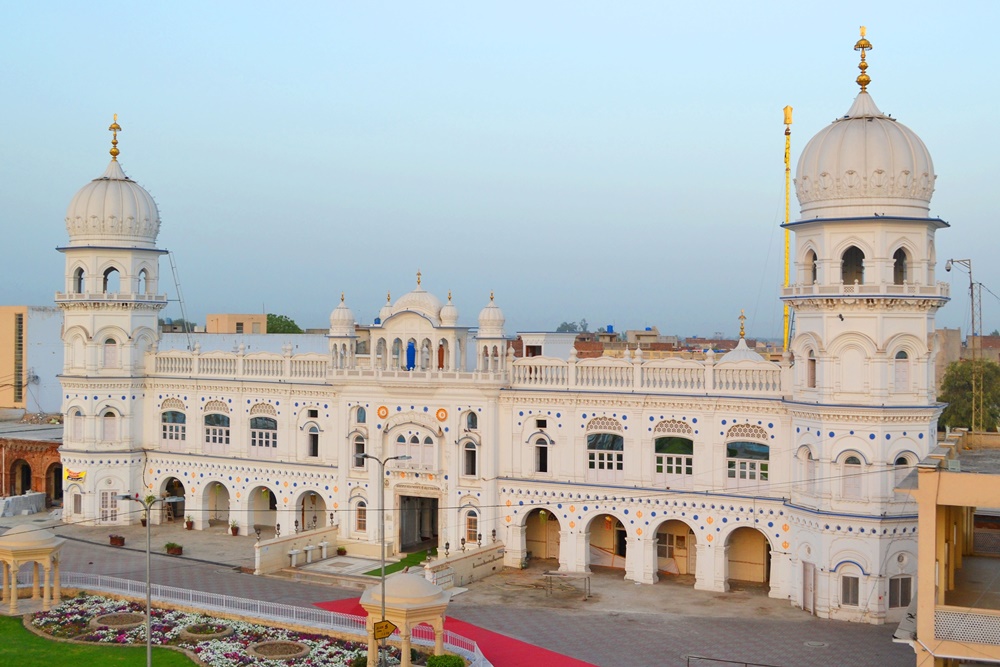
For many Sikh pilgrims, Gurdwara Janam Asthan Nankana Sahib is the spiritual starting point of a pilgrimage to Pakistan.
The shrine commemorates the birthplace of Guru Nanak Dev Ji and is situated in Nankana Sahib, Punjab. The site is protected as a heritage monument by the Punjab Archaeology Department and forms part of a wider collection of historic Sikh shrines in the city.
The atmosphere during major religious occasions is especially significant, as pilgrims gather for prayers, kirtan, religious ceremonies, community meals, and remembrance.
-
The Nankana Sahib Gurdwara Complex
Nankana Sahib is not represented by a single shrine alone. The city contains a group of historically important gurdwaras associated with Guru Nanak Dev Ji and other Sikh figures.
Documented sites include:
- Gurdwara Janam Asthan
- Gurdwara Bal Lilah
- Gurdwara Patti Sahib
- Gurdwara Mall Ji Sahib
- Gurdwara Kiara Sahib
- Gurdwara Tambu Sahib
- Gurdwara Guru Hargobind Sahib
- Gurdwara Guru Arjan Dev Ji
- Gurdwara Nihang Singhan
- Gurdwara Panjvin and Chhevin Patshahi
The Shiromani Gurdwara Parbandhak Committee’s current listing also identifies many of these Nankana Sahib shrines among the gurdwaras of Pakistan.
Together, these sites make Nankana Sahib one of the world’s most important Sikh pilgrimage landscapes.
-
Gurdwara Sacha Sauda — Farooqabad
Located near Farooqabad in Sheikhupura District, Gurdwara Sacha Sauda commemorates an important episode associated with Guru Nanak’s life.
According to Sikh tradition, Guru Nanak used money given to him by his father to purchase food and feed hungry people rather than pursue conventional commercial profit. The episode is associated with the principle of selfless service and compassion.
For pilgrims, Sacha Sauda is therefore not only a historic site but also a place to reflect upon Sikh teachings concerning service, generosity, equality, and sharing.
-
Gurdwara Panja Sahib — Hasan Abdal
Gurdwara Panja Sahib in Hasan Abdal is among the most revered Sikh shrines in Pakistan.
Its central sacred feature is the stone traditionally associated with the handprint, or panja, of Guru Nanak Dev Ji. The shrine is located near a natural spring, adding to the spiritual character of the site.
Hasan Abdal is particularly important during major Sikh pilgrimage occasions. The town is also historically interesting for travelers because of its location within a broader landscape containing Mughal-era heritage and the historic route toward the northwest.
-
Gurdwara Darbar Sahib — Kartarpur
If Nankana Sahib represents the beginning of Guru Nanak’s earthly journey, Kartarpur represents its final chapter.
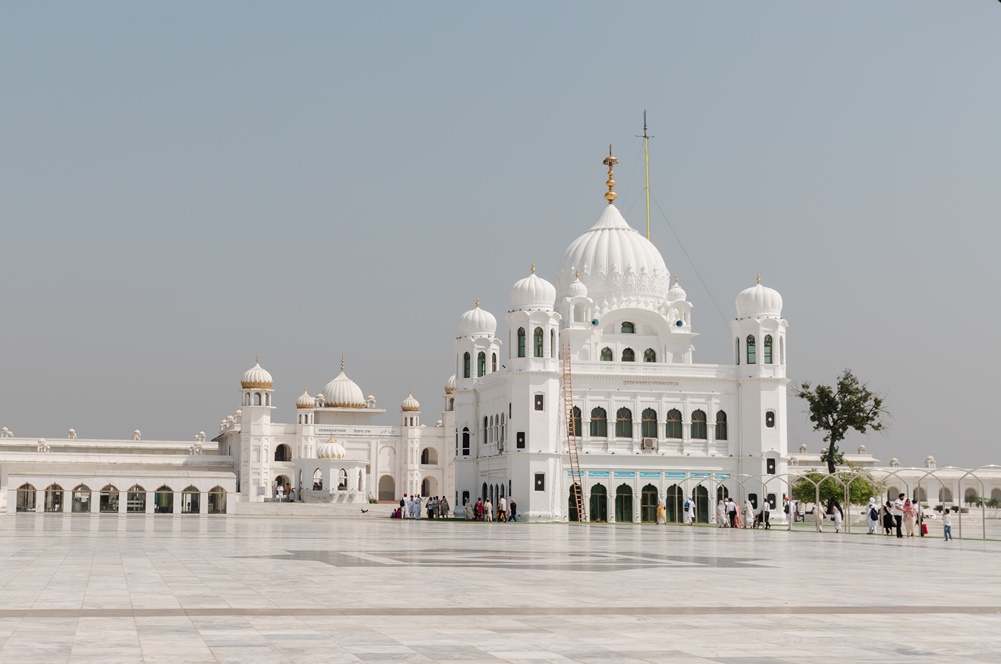
Gurdwara Darbar Sahib Kartarpur is located in Narowal District near the India-Pakistan border. Guru Nanak established a settlement here and spent the last approximately 18 years of his life. The site is therefore one of the most sacred destinations in Sikhism.
The opening of the Kartarpur Corridor in November 2019 created a historic new opportunity for Indian Sikh pilgrims to access the shrine. The corridor became a powerful symbol of religious connection and cross-border pilgrimage.
A visit to Kartarpur can be deeply moving because of its association with the principles of Naam Japo, Kirat Karo, and Vand Chhako—remembering God, earning an honest livelihood, and sharing with others.
-
Gurdwara Rohri Sahib — Eminabad
Eminabad, in Gujranwala District, is another important destination associated with Guru Nanak Dev Ji.
Gurdwara Rohri Sahib commemorates the Guru’s presence and teaching activities in the area. Nearby historic Sikh sites, including Chakki Sahib, contribute to Eminabad’s importance as a pilgrimage destination.
For travelers interested in the historical geography of Sikhism, Eminabad is especially valuable because it helps connect individual shrines into a larger story of Guru Nanak’s journeys.
-
Gurdwara Chakki Sahib — Eminabad
Gurdwara Chakki Sahib is associated with an episode in the life of Guru Nanak during the period of Babur’s invasion.
Sikh tradition connects the site with Guru Nanak’s imprisonment and the miraculous grinding of grain. It is therefore an important stop on Sikh heritage tours around Eminabad.
-
Gurdwara Dera Sahib — Lahore
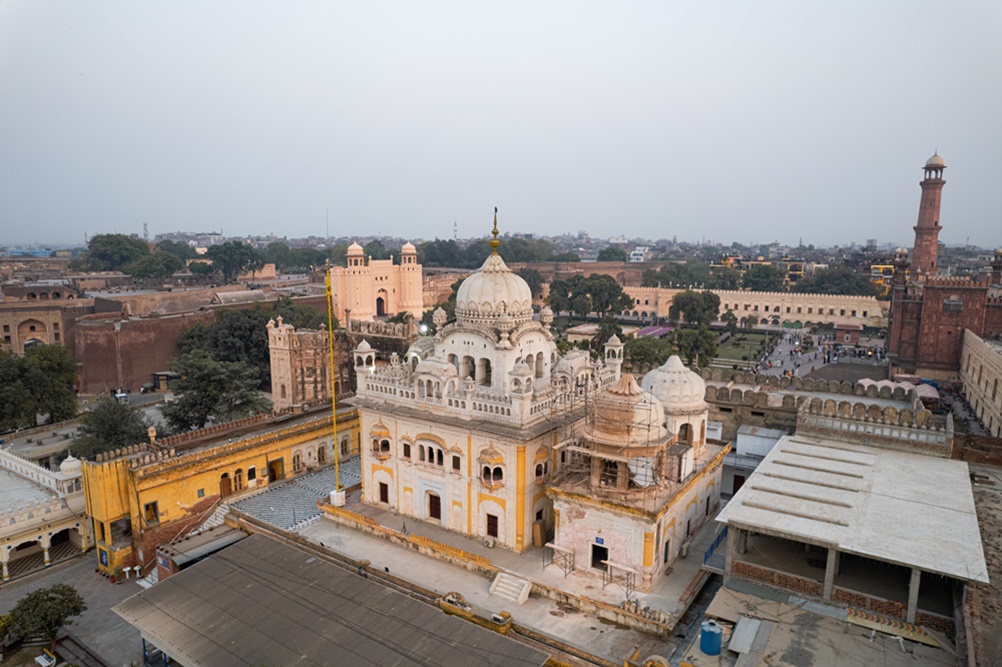
Lahore occupies an important position in Sikh history, and Gurdwara Dera Sahib is among the city’s most significant Sikh shrines.
The gurdwara is associated with Guru Arjan Dev Ji, the fifth Sikh Guru, and stands within Lahore’s historic walled-city landscape.
Its location is particularly remarkable for heritage travelers because the surrounding area contains some of the most important monuments of Lahore, including the Lahore Fort, Badshahi Mosque, Minar-e-Pakistan, and the former Sikh-era royal quarter.
-
Samadhi of Maharaja Ranjit Singh — Lahore
Although not a gurdwara, the Samadhi of Maharaja Ranjit Singh is an essential part of any Sikh heritage tour of Lahore.
Maharaja Ranjit Singh established the Sikh Empire in the early nineteenth century and made Lahore his capital. His mausoleum stands adjacent to Gurdwara Dera Sahib and close to Lahore Fort and Badshahi Mosque.
The location creates a remarkable historical concentration: Mughal, Sikh, and later periods of Lahore’s history can all be explored within a relatively compact area.
-
Lahore’s Wider Sikh Heritage
Lahore contains numerous historic Sikh sites beyond Dera Sahib.
The documented Sikh heritage inventory includes sites such as:
- Gurdwara Pehli Patshahi
- Gurdwara Sri Nank Garh
- Baoli Sahib Sri Guru Amar Das Ji
- Parkash Asthan Sri Guru Ram Das Ji
- Gurdwara Diwan Khana
- Dharamshala Sri Guru Ramdas Ji
- Gurdwara Baoli Sahib Guru Arjan Dev Ji
- Gurdwara Bhai Budhu Da Awa
- Gurdwara Lal Khooh
- Gurdwara Patschahi Chhevin
- Gurdwara Patschahi Chhevin Muzang
- Gurdwara Shikargarh Patshahi Chhevin
- Shahid Ganj Bhai Taru Singh
- Gurdwara Shahid Ganj Singhniyan
- Shahid Ganj Bhai Mani Singh
The SGPC’s listing of gurdwaras in Pakistan documents a substantial number of Lahore sites, while some historical inventories contain additional names and sites.
Not every historic site is necessarily open for unrestricted tourism, so a professionally organized pilgrimage should distinguish between active pilgrimage destinations, protected heritage sites, and restricted or privately controlled properties.
Sikh Heritage Beyond Lahore and Nankana Sahib
Sikh heritage in Pakistan extends well beyond the most famous pilgrimage centers.
Gujranwala and Eminabad
The Gujranwala region contains important sites associated with Guru Nanak and later Sikh history. Eminabad’s Rohri Sahib and Chakki Sahib are particularly significant.
Gujranwala is also important because of its association with the Sikh Empire and Maharaja Ranjit Singh, who was born in the region.
Sheikhupura and Farooqabad
The Sheikhupura region offers access to Sacha Sauda and other historic landscapes associated with Sikh history.
Travelers can combine these religious sites with the region’s broader Mughal and colonial heritage.
Jhelum and Rohtas
The area around Jhelum contains Gurdwara Sri Chowa Sahib, associated with Guru Nanak, near the magnificent Rohtas Fort.
This is an excellent example of how a Sikh pilgrimage itinerary can be combined with wider heritage tourism.
Sialkot
Sialkot contains historic Sikh sites associated with Guru Nanak and later Sikh traditions, including Gurdwara Bair Sahib and other documented heritage locations.
The city itself has a rich history extending from ancient settlements through medieval and colonial periods.
Multan
The southern Punjab city of Multan has historically been an important center of religious and cultural interaction. Sikh heritage inventories include Gurdwara Makhdoom Pur Pahoran, also associated with Tulamba Sahib, among other documented sites.
Peshawar
Sikh heritage extends into Khyber Pakhtunkhwa as well.
Gurdwara Bhai Joga Singh in Peshawar is one of the principal Sikh shrines identified by Pakistan’s Evacuee Trust Property Board.
A visit to Peshawar can become a particularly fascinating cultural experience because Sikh heritage is situated within one of South Asia’s oldest urban and trading environments.
Visitors can also explore Qissa Khawani Bazaar, Peshawar Museum, historic mosques, traditional markets, and the wider heritage of the ancient city.
This combination demonstrates that Sikh pilgrimage in Pakistan does not have to be isolated from broader cultural exploration.
Sikh Rituals and Religious Experiences in Pakistan
For Sikh pilgrims, visiting Pakistan is about much more than sightseeing. The religious experience inside a gurdwara is central to the journey.
Darshan
Darshan refers broadly to the devotional act of seeing or experiencing a sacred presence. At important Pakistani gurdwaras, pilgrims may spend quiet moments in prayer and contemplation before the Guru Granth Sahib and sacred spaces associated with the Gurus.
Kartarpur is particularly powerful because of its direct connection with Guru Nanak’s final years.
Kirtan
Kirtan, the devotional singing of Sikh hymns, is one of the defining experiences of a gurdwara visit.
Listening to Gurbani Kirtan in the sacred environment of Nankana Sahib, Panja Sahib, or Kartarpur can transform a heritage visit into a deeply spiritual experience.
Ardas
Ardas, the Sikh prayer of supplication and remembrance, is an important part of Sikh religious life.
Pilgrims may participate in Ardas during congregational services and significant religious occasions, praying for the well-being of humanity and remembering Sikh Gurus, martyrs, and historical events.
Akhand Path
An Akhand Path is the continuous, uninterrupted reading of the Guru Granth Sahib, traditionally completed over approximately 48 hours.
Such religious observances can be associated with important occasions and commemorations, although participation and arrangements vary according to the gurdwara and event.
Langar
One of the most meaningful experiences for visitors is langar, the community kitchen.
Langar expresses the principle of equality: people sit together and share a meal regardless of social status, wealth, caste, or background.
For travelers, experiencing langar provides an opportunity to understand Sikh philosophy through action rather than simply through historical interpretation.
Seva
Seva, or selfless service, is another fundamental Sikh practice.
Pilgrims and visitors may encounter seva in many forms, from helping prepare food and serving meals to cleaning and assisting other members of the congregation.
The experience reinforces one of the defining characteristics of Sikh religious culture: spirituality is closely connected with service to others.
Karah Prasad
Karah Prasad, a sacred preparation traditionally made from flour, sugar, clarified butter, and water, is distributed during Sikh religious observances.
Receiving Karah Prasad is an important part of the gurdwara experience and should be approached respectfully.
Nagar Kirtan
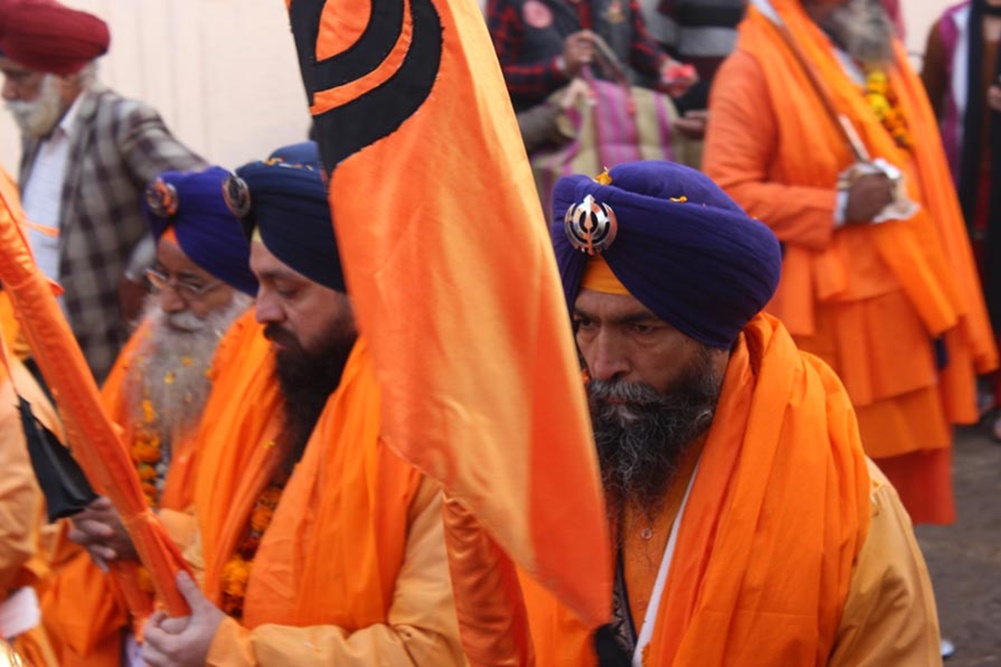
During major Sikh festivals and commemorations, Nagar Kirtan processions may bring religious devotion into the streets, featuring devotional singing, religious banners, processions, and community participation.
These public celebrations can offer visitors a vivid insight into Sikh religious culture.
Major Sikh Festivals and Pilgrimage Occasions
Pakistan attracts Sikh pilgrims particularly during major religious occasions.
Guru Nanak Gurpurab
The birth anniversary of Guru Nanak Dev Ji, commonly known as Guru Nanak Gurpurab, is among the most important pilgrimage occasions.
Nankana Sahib becomes the spiritual center of celebrations because of its association with Guru Nanak’s birth. Pakistan’s Evacuee Trust Property Board continues to organize major arrangements around the annual celebrations, which attract pilgrims from Pakistan and abroad.
Vaisakhi / Baisakhi
Vaisakhi is another major occasion for Sikh pilgrims.
It is associated with the formation of the Khalsa in 1699 and is celebrated with religious ceremonies, gatherings, kirtan, prayers, and community festivities.
For international Sikh travelers, visiting Pakistan during Vaisakhi can add a particularly vibrant dimension to a pilgrimage.
Martyrdom Commemorations and Gurpurabs
Other important occasions include Gurpurabs and commemorations associated with Sikh Gurus and martyrs.
These observances may draw pilgrims to specific gurdwaras connected with the individuals being remembered.
Because access, visa requirements, and official pilgrimage schedules can vary, travelers planning a religious journey around a specific festival should confirm arrangements with the relevant Pakistani authorities and pilgrimage organizers before departure.
What Sikh Travelers Can Explore in Lahore
Lahore deserves several days on a Sikh heritage itinerary because the city brings together religious, imperial, and cultural history.
A Sikh heritage exploration can include:
Gurdwara Dera Sahib: One of Lahore’s most important Sikh shrines.
Samadhi of Maharaja Ranjit Singh: Essential for understanding the Sikh Empire and Lahore’s nineteenth-century history.
Lahore Fort: A UNESCO World Heritage Site whose long history spans Mughal and Sikh periods.
Badshahi Mosque: One of Lahore’s most celebrated monuments, located directly across from the Sikh heritage complex.
Walled City of Lahore: Historic streets and neighborhoods provide an immersive experience of the city’s layered past.
Wazir Khan Mosque: A masterpiece of Mughal architecture.
Food Street: An excellent place to experience Lahore’s famous culinary culture.
Anarkali and traditional bazaars: Ideal for discovering handicrafts, textiles, traditional clothing, spices, and local food.
This combination allows travelers to understand Lahore not as a single-period destination but as a city shaped by Mughal, Sikh, colonial, and modern Pakistani history.
What Sikh Travelers Can Explore in Islamabad
Islamabad is generally the starting point or gateway for many international visitors arriving in Pakistan.
Although the capital itself is not the principal center of Sikh pilgrimage, it offers several attractions and serves as an excellent base for exploring nearby Sikh heritage.
From Islamabad, travelers can visit Hasan Abdal and Gurdwara Panja Sahib, making it one of the most important excursions for Sikh visitors.
Within Islamabad, travelers can also explore:
- Faisal Mosque
- Pakistan Monument
- Lok Virsa Heritage Museum
- Saidpur Village
- Daman-e-Koh
- Margalla Hills
The Lok Virsa Heritage Museum is particularly useful for travelers wanting broader cultural context before beginning a pilgrimage through Punjab and Khyber Pakhtunkhwa.
What Sikh Travelers Can Explore in Peshawar
Peshawar introduces another fascinating chapter of Sikh heritage.
The city historically sat at the crossroads of Central and South Asia and was connected to major trade and migration routes.
A Sikh heritage itinerary can include Gurdwara Bhai Joga Singh, followed by broader exploration of Peshawar’s historic core.
Key attractions include:
- Peshawar Museum
- Qissa Khawani Bazaar
- Mahabat Khan Mosque
- Historic bazaars
- Traditional Pashtun architecture
- The wider Khyber region, subject to current access and security regulations
The Peshawar Museum is particularly valuable for visitors interested in the region’s ancient Gandharan heritage, demonstrating how a single journey can connect Sikh history with the much older civilizations that flourished in this part of South Asia.
Why Combine Sikh Pilgrimage with Cultural Tourism?
One of the greatest advantages of exploring Sikh heritage in Pakistan is the opportunity to understand the historical landscape surrounding the gurdwaras.
A pilgrimage to Nankana Sahib can be combined with Lahore.
Panja Sahib can be combined with Hasan Abdal, Taxila, and Islamabad.
Eminabad can be combined with Gujranwala and Lahore.
Kartarpur can be combined with Narowal and other Punjab heritage destinations.
Peshawar can be combined with Gandhara heritage and the city’s historic bazaars.
This creates a richer journey in which travelers do not simply visit individual religious buildings but understand why these places mattered and how different civilizations, religions, and communities shaped the region.
Sikh Heritage and the Spirit of Interfaith Harmony
Sikh heritage tourism in Pakistan also offers an opportunity to explore a broader story of coexistence.
Guru Nanak’s teachings emphasized devotion to one God, honest work, sharing, equality, and service to humanity. The sacred geography associated with his life crosses modern political and religious boundaries.
Today, Sikh pilgrims visiting Pakistan encounter a country whose historical landscape contains Sikh, Muslim, Hindu, Buddhist, Jain, and Christian heritage.
The coexistence of Gurdwara Dera Sahib beside Lahore Fort and Badshahi Mosque, for example, creates an extraordinary physical representation of the city’s layered history.
Similarly, Kartarpur’s contemporary significance extends beyond pilgrimage. The Kartarpur Corridor has become a symbol of cross-border religious access and the ability of heritage to create connections between communities.
Planning a Sikh Heritage Tour in Pakistan
A meaningful Sikh heritage tour should be planned around both religious significance and practical accessibility.
A typical pilgrimage route can include:
Islamabad → Hasan Abdal → Peshawar → Sheikhupura/Farooqabad → Lahore → Nankana Sahib → Eminabad → Kartarpur
The exact route can be adjusted according to the pilgrim’s interests, available time, festival calendar, entry permissions, and current travel conditions.
International Sikh travelers should also pay particular attention to visa requirements, pilgrimage permissions, security procedures, transportation, accommodation, and festival-specific arrangements.
Not every historic gurdwara is currently accessible in the same way. Some are active places of worship, some are protected heritage properties, and others may have restricted access. A reputable local tour operator or specialist pilgrimage organizer can help coordinate the appropriate permissions and route.
Best Time for Sikh Pilgrimage in Pakistan
Pakistan can be visited throughout much of the year, but the most suitable season depends on the purpose of the journey.
October to April generally provides comfortable conditions for exploring Punjab, Islamabad, Hasan Abdal, Lahore, Nankana Sahib, and other heritage destinations.
November is particularly significant for those wishing to experience Guru Nanak Gurpurab celebrations at Nankana Sahib.
April is especially important for Vaisakhi-related pilgrimage.
Winter can be pleasant for heritage tours in Punjab, while summer can be hot in Lahore and other lowland areas.
Travelers should plan festival-based pilgrimages well in advance because demand for accommodation, transportation, and pilgrimage arrangements can increase considerably.
A Journey Through Living Sikh History
The Sikh heritage of Pakistan cannot be fully understood by counting gurdwaras or ticking landmarks off a sightseeing list.
Its significance lies in the stories attached to those places.
It is the birthplace of Guru Nanak at Nankana Sahib.
It is the community he established at Kartarpur.
It is the sacred tradition remembered at Panja Sahib.
It is the heritage of Guru Arjan Dev Ji at Dera Sahib.
It is the memory of Sikh rulers and Maharaja Ranjit Singh in Lahore.
It is the network of historic gurdwaras scattered across Punjab and extending toward Peshawar.
And it is the continuing tradition of prayer, kirtan, langar, seva, remembrance, and community that keeps these places meaningful today.
For Sikh travelers, Pakistan offers something profoundly personal: the opportunity to walk through landscapes associated with the Gurus and connect with a history that transcends modern borders.
For heritage travelers, it offers an extraordinary journey through one of South Asia’s most fascinating cultural landscapes.
For anyone interested in religious and cultural tourism, it demonstrates how faith, history, architecture, food, people, and place can come together to create a truly transformative travel experience.
Pakistan is therefore not simply a destination for Sikh heritage.
For millions of Sikhs around the world, it is part of their spiritual geography.
From Nankana Sahib to Kartarpur, Hasan Abdal to Lahore, Eminabad to Peshawar, the journey through Sikh heritage in Pakistan is a journey through the history, teachings, and living traditions of Sikhism—and one of the most meaningful cultural journeys the country has to offer.
Services
Services included
- Tourist class air conditioned transportation with fuel, tolls, and parking fees
- Accommodation on twin sharing basis
- Entrance fees
- All meals (BLD) and refreshments
- Services of an English speaking guide
Services not included
- International/domestic air tickets
- Personal insurances and loss beyond human capacity
- Expenses of personal nature
- Anything not mentioned in the “Services Include” section
Things to carry
- Important personal medicine and first aid kit especially medicine for high altitude sickness
- Passport/CNIC/NICOP
- Cash in PKR. Dollar exchange rate will be offered low as compared to it in Islamabad.
- Warm layers of clothing, especially for Babusar and Khunjerab.
- Rain coat/umbrella, comfortable walking shoes, several pairs of socks, flip flops etc.
- Cap/hat, scarf, sun-block cream, sunglasses, water bottle, wet tissues, eye mask etc.
- Hairbrush/comb, shampoo, toothbrush, toothpaste, floss, shaving kit etc.
- Cell phone, charger, charging bank, ear plugs, camera, camera charger, memory card, tri port, etc
- Organic dry apricots from Hunza to consume in case of altitude sickness at Khunjerab
- Any reading material and paperwork you may need.

Comments are closed